
For brands looking to customize power banks, certification is one of the key points that should be confirmed early in the project. Certification and compliance requirements vary depending on the target market, product configuration, and customization method.
As a power bank manufacturer with more than 20 years of experience, we’ll share the key certification issues that brands should pay attention to during the custom power bank process.
1 What Certifications Does a Custom Power Bank Need?
Certification and compliance requirements vary by market. Before starting a custom power bank project, the first step is to confirm where the product will be sold.
| Target Market | Main Certifications / Requirements | Notes |
| United States | UL 2056, FCC, California Proposition 65 and related compliance requirements | Battery cells may need to be evaluated against requirements such as UL 1642 and UL 62133-2 |
| European Union | CE, RoHS, Battery Regulation, WEEE recycling obligations | Products with wireless functions may also need to be evaluated for requirements such as RED and an EU Responsible Person |
| Japan | PSE test report, METI notification | Certain power banks fall under PSE requirements |
| South Korea | KC | Mandatory compliance with KC 62133-2; approval can be more efficient when based on CB certification |
| Cross-border transportation | UN38.3 test report | Required to meet relevant transportation testing requirements |
A single universal version of a power bank does not necessarily meet the requirements of every market.
If a factory already has the same or a similar product with existing certification documents, it is worth confirming in advance whether those certifications can be used for the customized product. This can help avoid repeated testing and unnecessary certification costs.
It is also important to note that certification documents are closely tied to the product model name. Even if the hardware remains unchanged, a new model number cannot simply be added without checking the certification requirements. In some cases, a certificate variant or model registration may be required.
2 Can a Power Bank Manufacturer Help With Certification?
For brands, working with a power bank manufacturer that has certification experience can help reduce certification risks later in the project.
When evaluating a power bank factory, it is worth confirming:
- Can the factory design products according to the standards required by the target market?
- Does the factory have experience with relevant product certifications?
- Can the factory provide the necessary certification documents?
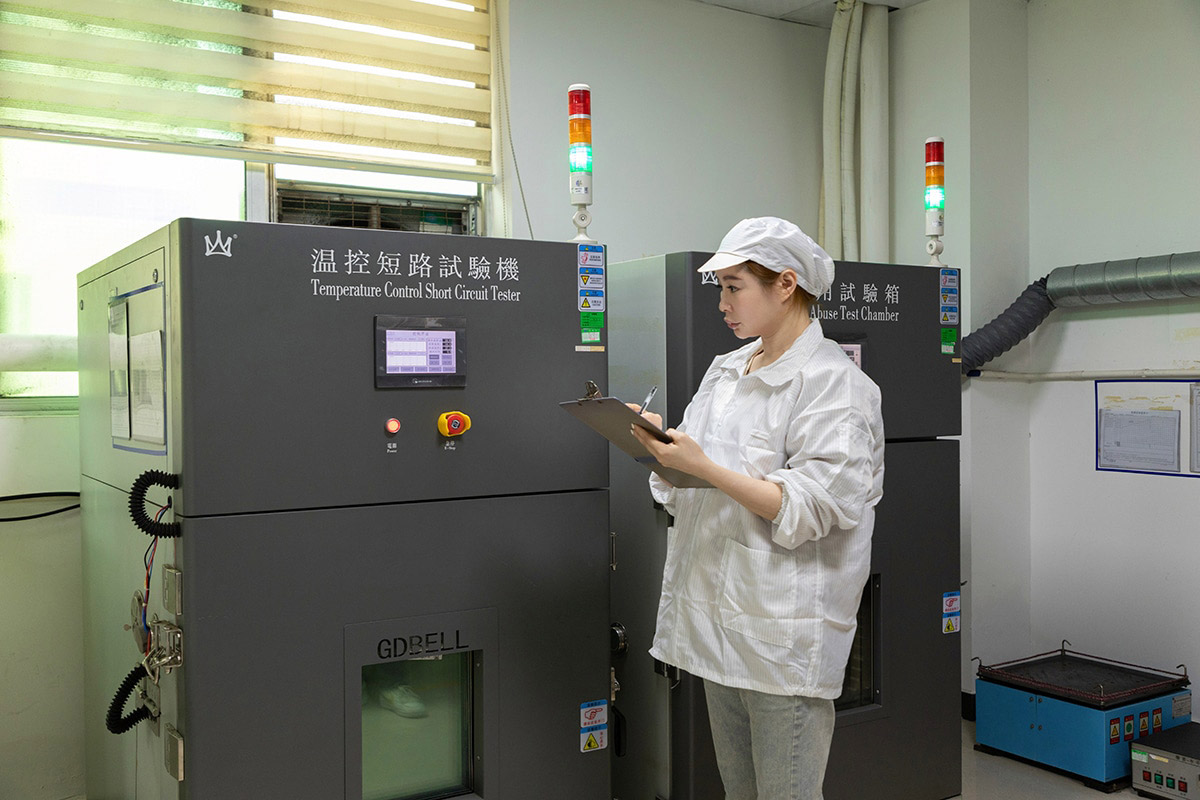
- Does the factory have pre-testing capabilities?
- Can the factory help communicate with certification organizations such as UL, TÜV, SGS, and CQC?
- Can the factory assist with certification applications and follow-up?
3 Which Customizations May Affect Existing Certifications?
Power bank certifications are usually related to the specific product configuration. Changes to the battery cell, PCBA, charging solution, wireless module, structure, or key materials may need to be evaluated by the certification body or laboratory.
| Customization | Possible Impact on Certification |
| Changing battery cell model / capacity | Usually requires re-evaluation of battery cell certification and overall product safety |
| Changing the PCBA / protection circuit | May affect safety and EMC requirements |
| Changing the housing material | Material and related safety requirements need to be evaluated |
| Adding wireless charging | May require additional RF / EMC testing |
| Changing the fast-charging solution | Relevant testing items need to be re-evaluated |
| Minor changes to interfaces / structure | Depending on the change, difference testing may be required |
| Customizing the logo / housing color / packaging | Usually does not require new safety or EMC testing, but hazardous substance compliance verification may be required. If the model number or brand information changes, technical documents, declarations of conformity, and certification documents need to be updated accordingly |
Before design and sampling, it is recommended to provide the factory with a detailed list of the planned customizations. The factory can then evaluate the potential impact on certification and confirm which changes can use existing certifications and which may require difference testing.
4 How Much Does Power Bank Certification Cost?
Certification costs are generally not fixed. They mainly depend on the following:
- Laboratory testing fees:Based on the certification type and target market.
- Certification application / certificate fees:Fees vary between certification organizations.
- Factory audit fees:Some certifications require factory inspections or follow-up audits.
- Sample and logistics costs:Including testing samples and related shipping costs.
Certification costs can also differ between common customization methods.
Customization based on an existing product:
If the customization is based on an existing factory product and only involves changes such as the logo or packaging, while the core electrical configuration remains unchanged, the existing certification documents can usually be evaluated first.
New product development:
If the project involves developing a new appearance, structure, circuit, battery cell, or function, the certification requirements need to be evaluated based on the final product.
Actual certification costs depend on the product solution, target market, and quotation from the certification organization.
5 How Long Does Power Bank Certification Take?
The certification timeline depends on the product configuration, target market, existing test documents, and whether difference testing is required.
In some cases, certification can take around 3–4 weeks. More complex projects may take 2–3 months or even longer.
For an existing and mature product, the factory can first evaluate whether existing certification documents can be used. For a newly developed product, more time should be allowed for testing and necessary modifications. Certification work can also be started alongside the project from the beginning.
6 What Should Brands Confirm With the Factory Before Customizing a Power Bank?
During the early project discussion or before sampling, brands should confirm the following:
[01] What is the target sales market?
What certification and compliance requirements does the product need to meet?
[02] Does the factory have existing product certifications that can be used?
[03] Will the planned customization require difference testing or new certification?
[04] Can the factory provide pre-testing and certification assistance?
[05] What does the certification cost include, and who will cover the cost?
[06] Could the certification timeline affect mass production and the product launch schedule?
FAQ
Q1: If I only change the logo and packaging, do I need to repeat certification?
If the battery cell, PCBA, structure, and other key configurations remain unchanged, simply changing the logo and packaging usually does not require the product to undergo new overall safety certification.
However, if the model number, brand information, or other relevant information changes, the corresponding technical documents need to be updated.
Q2: Who pays for the certification costs, the factory or the brand?
In most cases, the brand pays for the certification costs. The specific arrangement depends on the cooperation model and the agreement between both parties.
Q3: Can one power bank meet both CE and UL requirements?
Yes. However, the product still needs to be evaluated and tested separately according to the requirements of the European and U.S. markets.
Final Thoughts
For brands customizing power banks, it is better to confirm the target market and certification requirements before finalizing the product configuration. This can help reduce the risk of later modifications, additional testing, and project delays.
Founded in 2004, JOWAY provides full-process OEM/ODM customization services, covering design, R&D, mold development, and production. We also assist with certifications such as UL, CE, PSE, and KC, as well as compliance testing such as UN38.3.
If you are looking for a power bank manufacturer for OEM/ODM customization, you can share your target market, product requirements, and order quantity with us. We can evaluate the certification requirements and customization solution based on your specific project.