
For brands looking for a reliable power bank OEM/ODM manufacturer, R&D capability is one of the most important factors to consider when choosing a manufacturing partner.
Many power bank factories claim they support customization. However, after further discussion, you’ll often find that some can only provide basic OEM services such as logo printing, color changes, packaging, or graphic customization. Once your project involves mold development, new product design, hardware modification, firmware changes, or other ODM requirements, they may no longer be able to support it.
If your goal is to develop a differentiated product rather than simply rebranding an existing model, evaluating a factory’s R&D capability before starting the project is essential.
So, how can you tell whether a power bank manufacturer truly has strong R&D capabilities? Here are several practical points that can help you make a better decision during supplier evaluation.
1. Does the Factory Have an Independent R&D Team?
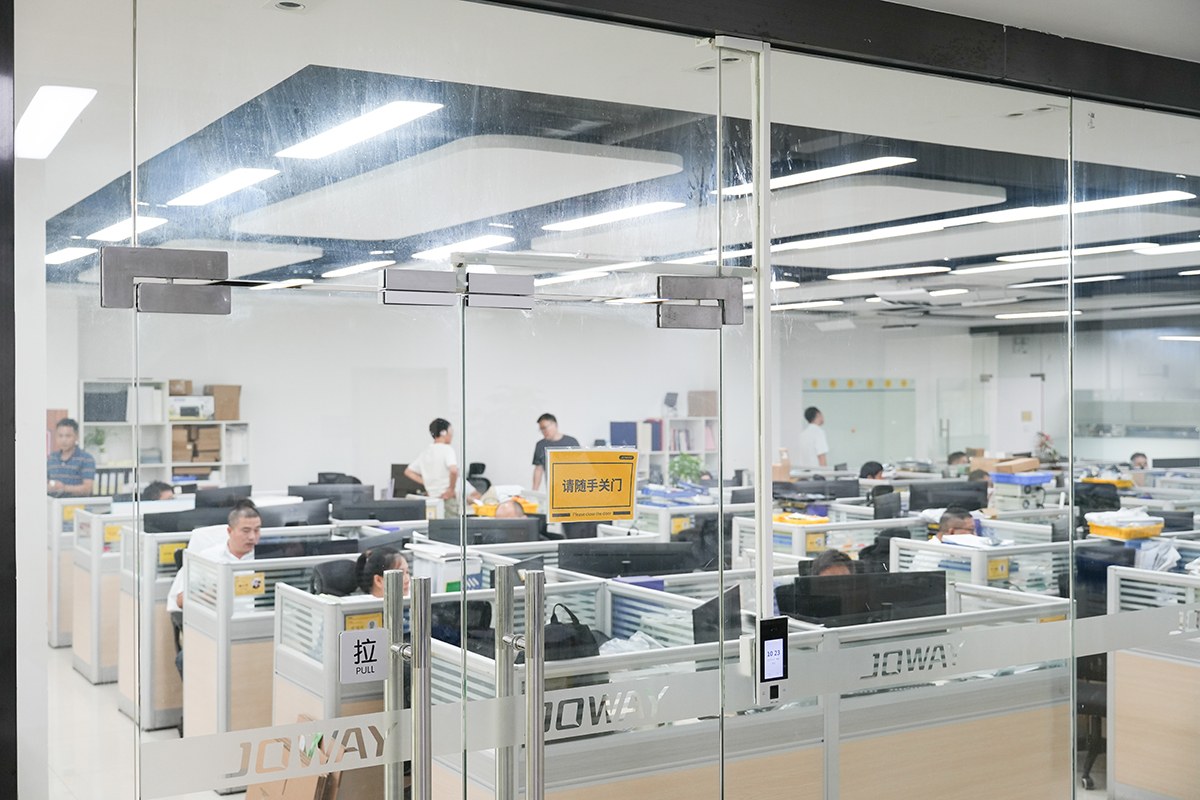
The first thing to look at is whether the manufacturer has its own dedicated R&D team.
The team size is important, but a complete organizational structure matters even more. A capable power bank manufacturer should have specialists covering industrial design (ID), mechanical engineering, electronic hardware, firmware/software development, and testing.
A well-rounded R&D team usually indicates that the factory can handle more complex OEM and ODM projects instead of only providing simple private-label production.
If your project requires OEM or ODM customization, working with a manufacturer that has a complete in-house R&D team is generally the better choice.
2. Can the Factory Develop a Product from Scratch?
Not all power bank manufacturers offer the same level of customization.
Many OEM factories only modify existing products by changing the housing, adding a logo, customizing graphics, or updating the packaging.
A manufacturer with genuine R&D capability can participate in the entire product development process—from product definition and industrial design to structural engineering, electronic development, prototype building, and mass production.
If you’re planning to develop a completely new power bank instead of using an existing public mold design, this is one of the most important factors to evaluate.
3. Does the Factory Have Its Own Laboratory and Product Validation Capabilities?
Strong R&D is not only about designing products—it’s also about validating them.
A mature power bank factory typically has its own testing laboratory and can perform common reliability tests in-house, including:
Drop testing
High- and low-temperature testing
Charge and discharge testing
Battery cell nail penetration testing
Compatibility testing
Aging testing
Built-in cable bending tests
If most testing has to be outsourced to third-party laboratories, development timelines become more difficult to control, and product issues usually take longer to verify and resolve.
4. Does the Factory Have a Complete New Product Development Process?
Manufacturers with real ODM capabilities usually follow a well-defined new product development (NPD) process.
This typically covers every stage, including product definition, industrial design, mechanical design, EVT (Engineering Validation Test), DVT (Design Validation Test), PVT (Production Validation Test), and finally mass production (MP).
When communicating with a supplier, ask them to explain their complete development process.
If their answers are vague or they cannot clearly explain each development stage, it’s worth taking a closer look at their actual R&D capabilities.
5. Does the Factory Own Its Intellectual Property and Patents?
The number of patents alone doesn’t determine a factory’s R&D strength, but it does indicate whether the company continues to invest in product development.
Focus on understanding how many invention patents, utility model patents, and design patents the factory owns, and whether those patents are directly related to power bank products.
Compared with manufacturers that only produce public mold products, factories with their own intellectual property generally have stronger product innovation capabilities and are better equipped to support differentiated product development.
6. Technical Expertise, Customer Experience, and Certification Capability
Besides evaluating the R&D team, it’s also worth understanding the manufacturer’s technical expertise and customer portfolio.
Factories that have worked with well-known brands usually have more mature experience in product development, quality management, and project execution.
Product certification experience is another important consideration. Ask whether the factory has experience with certifications such as CE, FCC, RoHS, and UN38.3. If your project involves wireless charging products, it’s also worth confirming whether they have experience developing products that require Qi2 certification.
If the manufacturer has already completed the certifications required for your target market, your project will typically move more smoothly and encounter fewer certification-related issues.
7. How to Quickly Evaluate a Power Bank Factory’s R&D Capability
If you have limited time during supplier evaluation, you can simply ask the following questions:
Do you have an independent R&D team? How is the team structured?
What OEM and ODM services do you provide? Can you support full product development from scratch?
Do you have your own laboratory? Which tests can be completed in-house?
Can you provide development documentation such as EVT, DVT, and PVT?
How many invention, utility model, and design patents do you own?
Are you certified as a National High-Tech Enterprise? Is the certification still valid?
Have you completed product certifications for my target market before?
The answers to these questions will give you a good initial understanding of a power bank manufacturer’s R&D capability.
If possible, it’s still recommended to conduct an on-site factory audit to verify the R&D team, laboratory, and development process firsthand.
Conclusion
When choosing a power bank manufacturer, price shouldn’t be the only factor you consider. R&D capability is equally important.
A manufacturer with strong R&D expertise does far more than simply produce products. They can participate in product development, testing, problem solving, and future product improvements, helping your project move into mass production more efficiently.
If a factory meets your initial requirements during communication, arranging an on-site audit is the best next step. It allows you to verify the R&D team, laboratory, and development process in person and confirm whether the manufacturer truly has the OEM/ODM development capabilities your project requires before establishing a long-term partnership.
FAQ
Q1: Does every OEM power bank manufacturer have R&D capabilities?
Not necessarily. Some manufacturers only provide basic OEM services such as logo printing and packaging customization. When a project requires product development, feature upgrades, or ODM solutions, they may not have the necessary R&D capabilities. It’s always best to verify this before starting a partnership.
Q2: Does a larger R&D team always mean stronger capabilities?
Not necessarily. Team size is less important than having a complete team structure and the ability to continuously develop new products and solve technical challenges.
Q3: How can I verify that a factory really has an R&D team?
Besides asking about the team size, you can visit the factory’s R&D office and laboratory, check its testing equipment and development facilities, and review actual development projects. These provide much more reliable evidence than verbal introductions alone.
Q4: Why is R&D capability especially important for ODM projects?
Because ODM projects involve much more than manufacturing. They include product definition, industrial design, structural development, product validation, and mass production preparation, all of which require a much stronger R&D system than standard OEM projects.


