
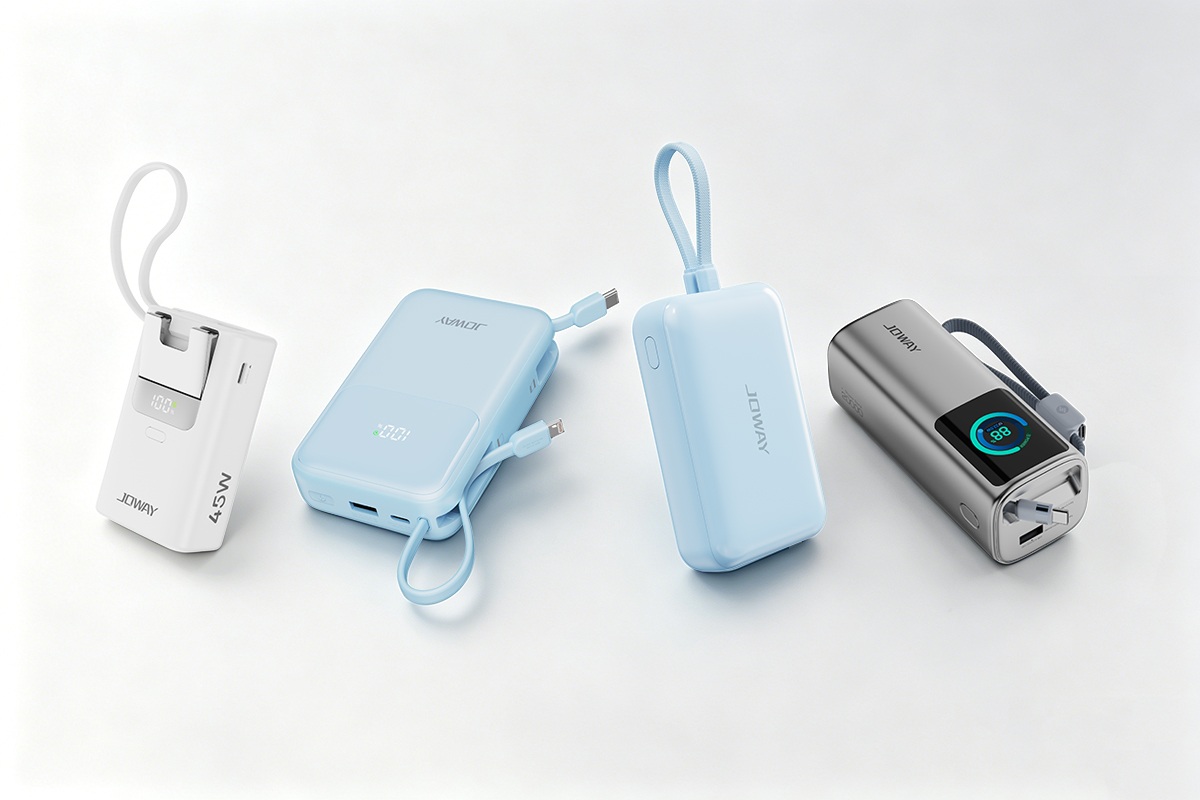
As demand for convenience continues to grow, power banks with built-in cables have become one of the most popular categories in the portable charging market. For brands and sourcing managers, choosing the right built-in cable solution, managing development costs, and ensuring product quality are all important parts of a successful product launch.
1. Popular Power Bank with Built-in Cable Options
Today, the most common built-in cable power bank designs include single USB-C cable models, dual-cable versions, lanyard-style designs, and retractable cable solutions. Understanding the strengths of each option can help brands choose a product that better fits their target market.
1.1 USB-C Power Bank with Built-in Cable
USB-C has become the standard charging interface for most modern devices, so many built-in cable power banks now feature a USB-C cable as standard.
This design is compatible with a wide range of devices from Apple, Samsung, Xiaomi, Huawei, and other major brands. When paired with suitable capacity and output power, some models can also provide emergency charging for laptops, making them useful for business travel and mobile working environments.
Many promotional power bank projects and cross-border e-commerce brands prefer this solution because of its broad compatibility.
1.2 Dual Built-in Cable Power Bank
Dual-cable designs usually include both a USB-C cable and a Lightning cable.
USB-C supports most current devices, while the Lightning connector remains compatible with iPhone 14 and earlier models. Together, these two interfaces cover the majority of devices still in use today.
For brands targeting users across different smartphone ecosystems, a dual-cable power bank offers a clear compatibility advantage.

1.3 Lanyard-Style Built-in Cable Design
Lanyard-style designs allow users to carry the power bank by hand or attach it to a backpack, making it easier to access when needed.
This convenience has made the design increasingly popular for commuting and travel, as users do not need to search through a bag every time they need to charge a device.
Many custom power bank projects have adopted this design in recent years as a way to create stronger product differentiation.
1.4 Retractable Cable Design
Retractable cable power banks have a more complex structure and generally cost more to manufacture.
Their main advantage is cable management. Users can adjust the cable length within the available range, making charging more convenient in different situations while keeping the cable neatly stored when not in use.
From both a practical and visual standpoint, retractable cable designs provide a cleaner user experience.
For brands targeting premium market segments, this is a product direction worth considering.
In practice, some products combine multiple built-in cable solutions to meet different user needs.
2. Common Quality Issues with Built-in Cable Power Banks
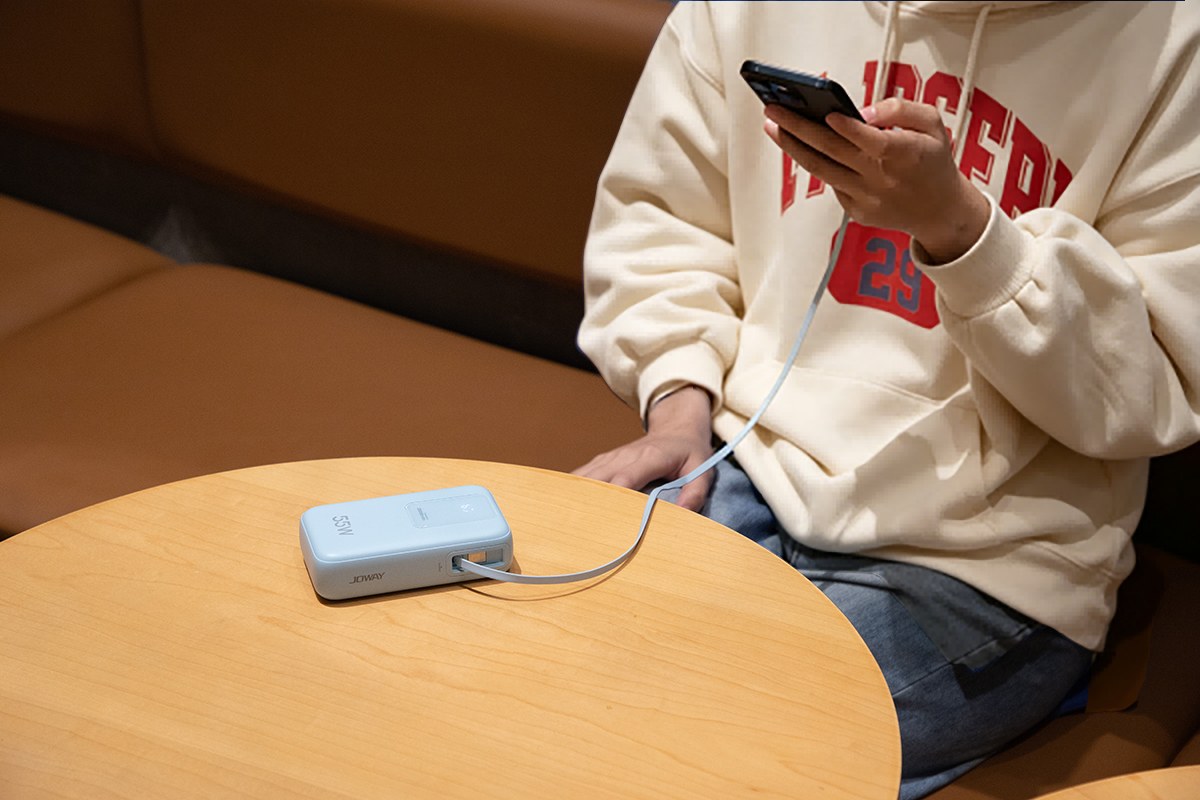
While built-in cable power banks offer greater convenience, they also introduce potential durability concerns. Product reliability and after-sales performance are often key factors when buyers evaluate suppliers.
2.1 Cable Breakage
Because built-in cables are repeatedly bent and pulled during daily use, cable breakage is one of the most common customer complaints.
Once the cable is damaged, users often need to carry an additional charging cable, which reduces the convenience that originally attracted them to the product.
For custom power bank projects, brands should consider braided cable options and pay close attention to cable swing testing and bending tests to better evaluate cable lifespan before mass production.
2.2 Connector Wear
Charging connectors also have a limited service life. Over time, repeated plugging and unplugging can cause wear, which may result in poor charging contact.
To reduce this risk, manufacturers usually focus on connector structure optimization and conduct insertion cycle testing as well as insertion and extraction force testing.
2.3 Loose Cable Assembly
Cracks around the cable outlet, loose cables, or adhesive failure where the cable connects to the housing are also common issues seen in built-in cable power banks.
For brands that place a strong emphasis on customer experience, especially in premium product lines, it may be worth discussing cable replacement options with the manufacturer during the project planning stage.
3. What Affects the Cost of a Power Bank with Built-in Cable?
Many buyers find that quotations can vary significantly between suppliers, even when products have the same battery capacity. Several factors influence the final cost.
3.1 Battery Cells
Battery cells are one of the most important components inside a power bank.
Different cell solutions can result in substantial cost differences, making battery selection a key factor in overall product pricing.
3.2 Fast Charging Power
Charging power is another major cost factor.
As power output increases, manufacturers need more advanced charging and discharging solutions, protocol chips, thermal management systems, and safety protection circuits.
3.3 Single-Cable vs. Dual-Cable Design
Whether a product uses a single built-in cable or a dual-cable design also affects manufacturing cost.
While the impact may not be as significant as battery cells or charging power, it should not be overlooked.
3.4 Housing Materials and Finishing
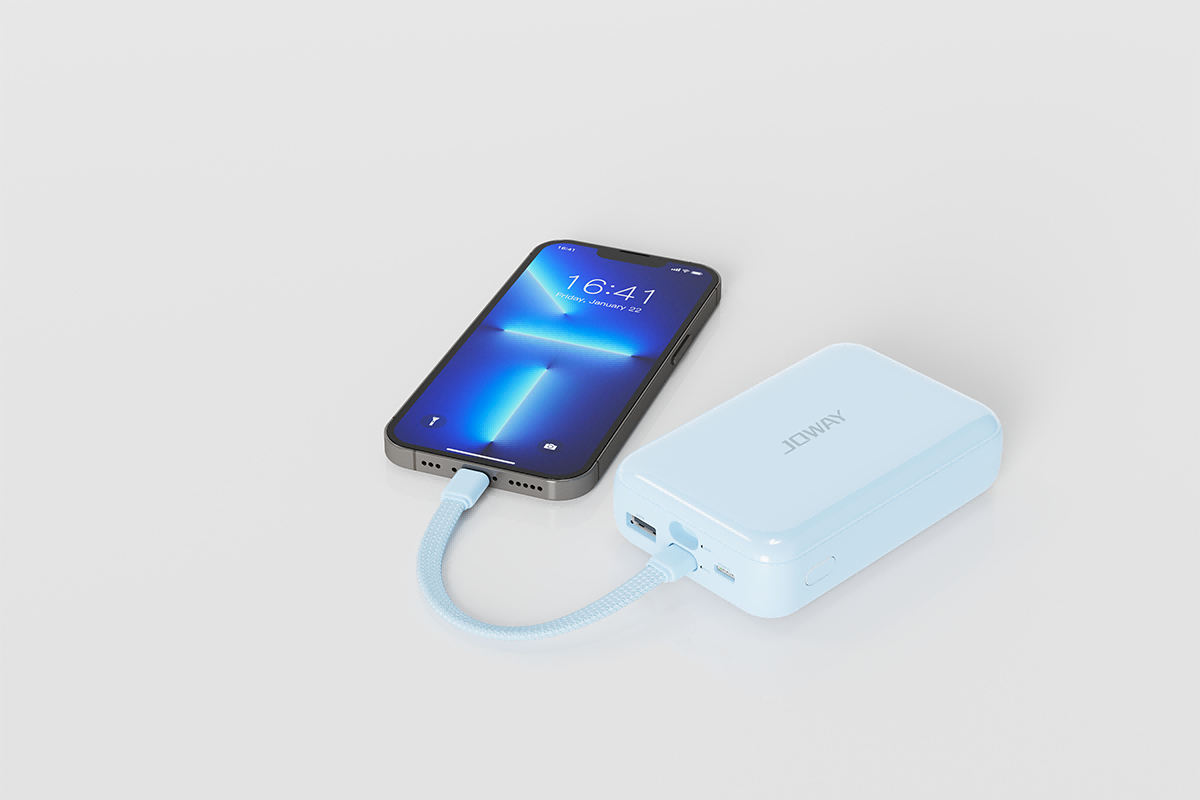
The housing material, surface finishing process, logo application method, and product marking process can all influence production costs.
This is particularly important for promotional and corporate gift power bank projects, where appearance and branding requirements are often higher.
In addition to these factors, packaging solutions, order quantities, and certification requirements for different markets can also affect the final cost.
4. Key Considerations for a Custom Built-in Cable Power Bank Project
For brands planning to develop a custom power bank with built-in cables, confirming the following points early can help improve project efficiency and reduce development risks.
4.1 Define Your Target Market
Capacity requirements, design preferences, and feature expectations vary significantly between markets.
A clear understanding of the target market helps determine product positioning, appearance, functionality, and pricing, all of which can influence market acceptance.
4.2 Confirm Product Specifications
Capacity:10000mAh,20000mAh,30000mAh,50000mAh or higher
Output Power:20W,22.5W,45W,65W,100W or higher
Battery Types:Lithium Polymer Cells,LiFePO4 Cells,Semi-Solid-State Cells
Interfaces:USB-C,Lightning
Cable Materials:TPE,Silicone,Braided Cable
4.3 Confirm Certification Requirements
Different markets have different certification requirements for power banks.
Understanding these requirements early allows certification work to proceed alongside product development and helps avoid delays before launch.
Common certifications include: CCC,CE,FCC,UL,RoHS,UN38.3
4.4 MOQ and Lead Time
MOQ has a direct impact on unit cost, making it an important topic during discussions with suppliers.
Lead time should also be aligned with the product launch schedule to avoid delays in bringing the product to market.
4.5 Sample Testing
Before moving into mass production, brands should confirm which reliability tests will be performed, how long testing will take, and whether additional testing is required.
Sample testing plays an important role in product consistency, long-term reliability, and after-sales performance.
Conclusion
If you do not have your own R&D team, production facilities, or extensive experience in power bank development, working with an experienced OEM/ODM power bank manufacturer can make the process much smoother.
An experienced manufacturer can help you complete product development more efficiently while providing support in quality control, certifications, cost management, and production scheduling. This can help reduce development risks and improve the chances of a successful product launch.