
In recent years, safety incidents involving power banks have become increasingly common, and consumers are more alert than ever to the risks. This trend places higher expectations on power bank brands. Product safety directly affects both a brand’s reputation and the safety of its users. As a power bank manufacturer with over 20 years of industry experience, we know that safety is the foundation of any strong brand. So, what truly determines how safe a power bank is? This article is designed to support you in making informed decisions.
The safety of a power bank depends primarily on strict control of key components such as the battery cells and PCBA, supported by sound, science-based product design and a robust quality management system. In the following sections, we will look at these aspects in more detail.

1 Control Key Materials
1.1 Choose the Right Battery Cells
Battery cells are the most critical component of any power bank, so they must be selected with great care. The first step is to identify the most suitable cell type for the product. Equal attention should then be given to the overall capability of the cell supplier. Prioritising established, reputable battery cell brands is usually the wisest choice. Wherever possible, suppliers should be assessed in a rounded way, including their certifications, scale and technical expertise.
1.2 Comprehensive PCBA Inspection
As a core part of a power bank, the PCBA must be subject to rigorous inspection. Every board should undergo 100% testing to safeguard product quality. Ideally, you should work with a power bank manufacturer that handles PCBA surface-mount production in-house. This streamlines the supply chain, keeps full process control within the factory, and significantly reduces the risk associated with incoming components.
2 Product Design
2.1 Fail-safe Design
Safety must be built into a power bank from the very start of the design process. Drawing on real-life usage scenarios, user-centred design helps to prevent risks caused by accidental operation or misuse. At the same time, multiple protection features – including overcharge, short-circuit and high/low temperature protection – are integrated into the system. Together, these measures increase the product’s tolerance to error and maximise safety for both users and their devices.
2.2 R&D Capability
Manufacturers need well-established power bank R&D capabilities, supported by an experienced engineering team. Safety considerations should be embedded from the earliest stages of product development. Strong competence in applying new technologies enables earlier and more accurate identification of potential risks, helping to minimise safety issues later in the product’s lifecycle.
2.3 Reliability Testing
Robust reliability testing at an early stage significantly reduces the likelihood of issues once the product is in use. Manufacturers should be equipped with advanced reliability testing facilities to run a comprehensive test programme. This should cover functional testing and mechanical strength testing, as well as validation under extreme environmental conditions. Typical tests include charge–discharge performance, vibration, drop and impact resistance, insertion and withdrawal force, high and low temperature, humidity and salt spray, among other checks.
3 Quality Management System
3.1 Quality Control Process
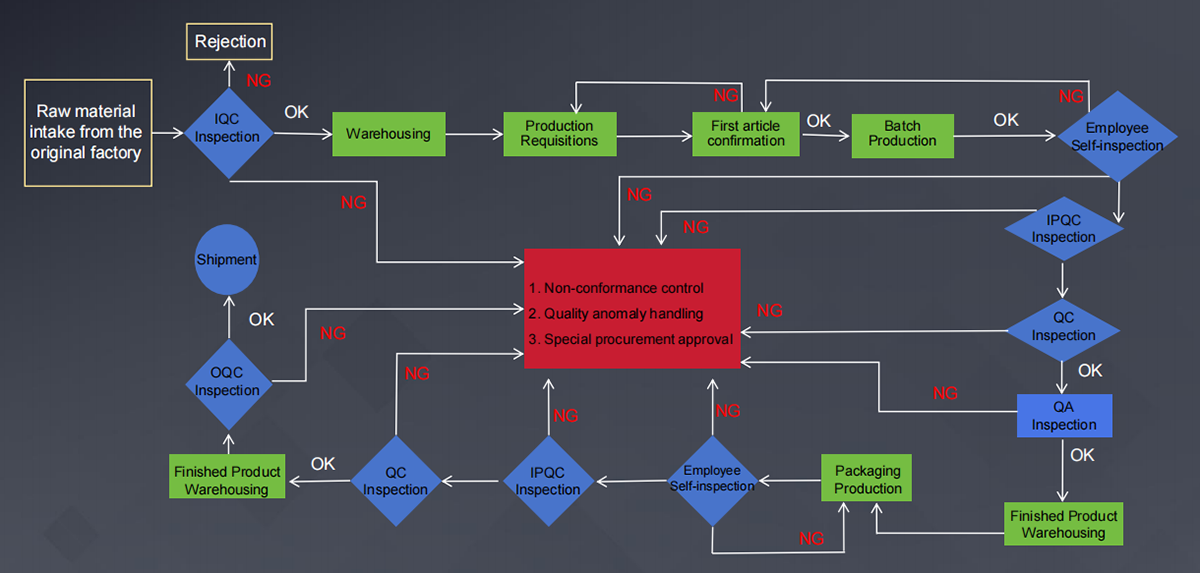
A comprehensive quality control process is essential. Every step – from IQC (incoming quality control) of materials, through IPQC (in-process quality control), to final product inspection – must be tightly controlled. On top of this, quality issues need to be precisely traceable. At the QiaoWei factory, for example, an MES intelligent manufacturing system has been fully implemented to link materials with real-time production data. This delivers end-to-end transparency across the entire process and enables highly accurate traceability.
3.2 Control of Critical Processes
During assembly, quality control must focus on the most critical process steps. Key stages such as SMT placement, manual and post-soldering work, full inspection of PCBA boards, welding of battery cells to the PCBA, charge–discharge testing and complete functional testing all need to be tightly managed. It is equally important to confirm that 100% ageing (burn-in) testing is carried out on the products.
3.3 Laboratory Capabilities
Laboratory capability is a major factor in overall quality assurance. Elements such as the size of the lab, the sophistication and quantity of equipment, and the strength of the specialist team all play a crucial role in effective quality control. During a factory audit, it is advisable to visit the laboratory in person to gain a clear and detailed understanding of these capabilities.
4 Choosing a Professional and Reliable Power Bank Manufacturer
4.1 Compliance and Certification Capability
When selecting an original power bank manufacturer, there are several key areas that deserve close attention.
The factory should employ dedicated safety and compliance engineers with solid, hands-on experience of certification processes. Relevant approvals should cover environmental compliance, transport safety and market access in your target countries or regions, including certifications such as CCC, CE, FCC, UL, RoHS and UN38.3. These certifications are critical to ensuring that jointly developed products pass regulatory checks smoothly and that new models can reach the market on schedule.
4.2 Production Capacity and Delivery Performance
Internationally recognised BSCI accreditation is a strong indicator of a factory’s overall strength. The size of the production facilities, the professionalism and discipline of the team, and the level of advanced equipment and automation all have a direct impact on delivery performance. In addition, key metrics such as the yield rate of battery cells, the pass rate of fully inspected PCBA boards and the final product pass rate should be carefully reviewed. Together, these factors are fundamental to ensuring that projects are delivered smoothly, reliably and on time.
4.3 Innovation and Technical Capability
It is equally important to evaluate a power bank manufacturer’s capacity for innovation and its ability to adopt new technologies. These capabilities are critical to ensuring that future power bank ranges stand out in a crowded market and stay aligned with emerging trends.
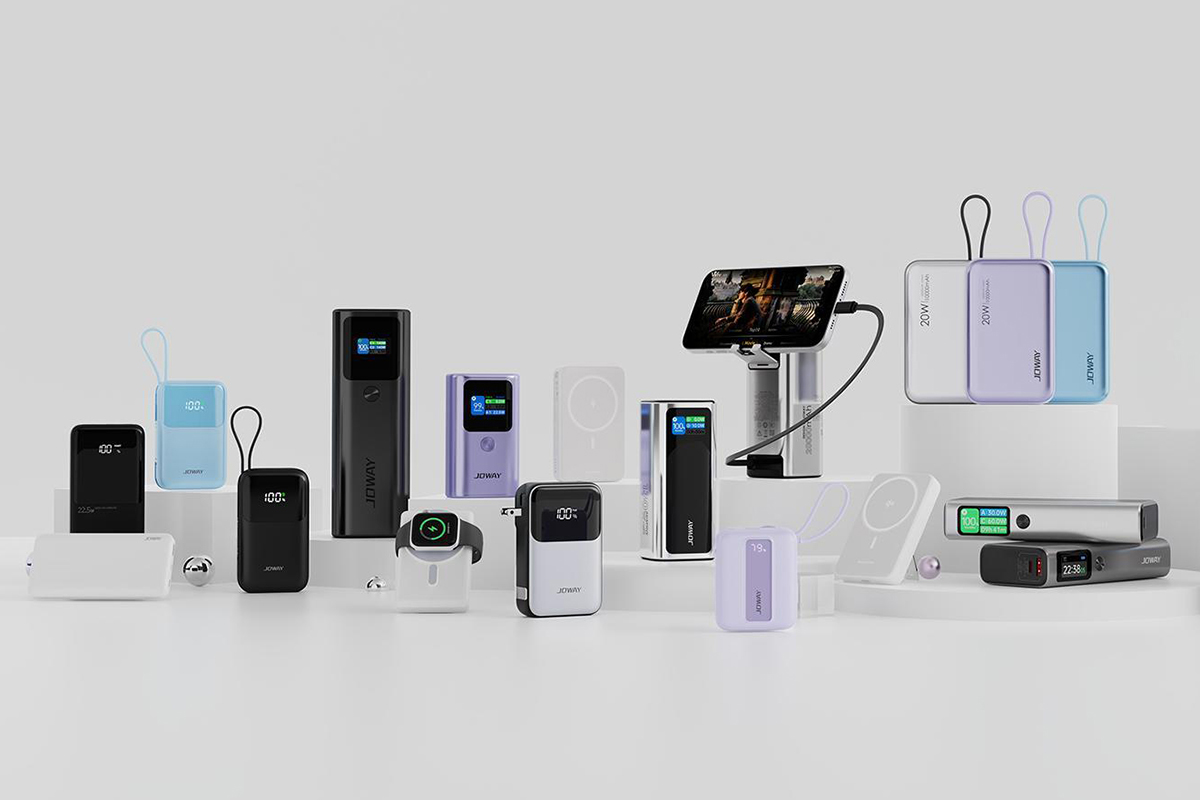
If you are currently seeking a professional and dependable OEM/ODM power bank partner, we invite you to contact us for a detailed quotation and proposal. Backed by more than 20 years of accumulated expertise in the power bank sector, JOWAY is well placed to deliver robust, fully developed power bank solutions.

5 FAQ – Frequently Asked Questions
Q1 How can we be involved in the factory’s quality control process?
A: You can request test reports at key control points, send your own staff to the factory to observe and oversee on-site inspections, or ask the factory to supply samples for your own independent testing. Taken together, these measures help to ensure that product quality is consistently and reliably maintained.
Q2 Can the battery cell and charging solution suppliers be written into the contract?
A: This can be agreed according to the needs of each project. During commercial discussions, you can first clarify which battery cell brands and fast-charging solution providers the factory currently uses. You may then negotiate whether specific suppliers can be designated and have these details formally included in the contract.
Q3 Do you offer product-related certification services?
A: Yes. We have dedicated safety and compliance engineers who can support you with the required certifications. The exact scope and approach can be tailored to the specific requirements of your project.